Complaints Procedure for House Clearance Woolwich
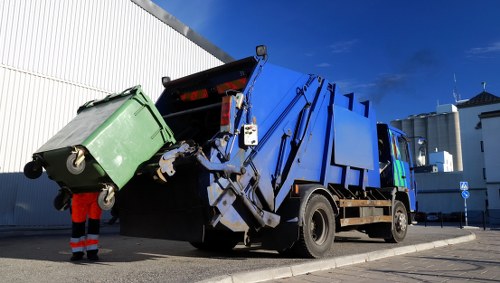 This document explains the formal complaints procedure for our House Clearance Woolwich operations and related rubbish removal services. It sets out clear steps for customers to raise concerns and describes how we will assess and resolve issues. Our aim is to provide a prompt, fair and documented response to every complaint while ensuring consistency with regulatory and environmental obligations. This procedure covers complaints about scheduling, staff conduct, handling of possessions, disposal methods and site condition after a job.
Our service standards for house clearance in Woolwich are designed to protect customers and the environment. We will:
- Acknowledge receipt of complaints promptly and provide a reference number.
- Investigate with impartiality and keep complainants updated.
- Record outcomes and take corrective action where needed to improve future Woolwich house clearance operations.
 Complaints should be raised as soon as possible after the event to allow effective investigation. While we do not include specific contact channels on this legal page, complaints may be submitted in writing or verbally through the channels provided at the time of booking. When making a complaint, provide: date of service, location, names of any crew if known, description of the issue and relevant photos or documentation. Timely evidence helps with accurate fact-finding and reduces delays in resolution.
How we investigate complaints about Woolwich clearance services
Each complaint is logged and given an initial priority based on safety, environmental risk and customer impact. A complaints handler undertakes an initial assessment within 3 working days to determine the scope of investigation and whether immediate remedial action is required. That initial assessment will check job sheets, crew notes, manifests and any waste transfer documentation. If the complaint raises health and safety concerns, we will take interim steps to secure safety while the full investigation continues.
 The full investigation will generally include: witness statements from staff, examination of photographic or video evidence, review of disposal records and, where available, CCTV or GPS logs. The investigation process follows three stages:
- intake and acknowledgement, including assigning a reference;
- fact-finding and gathering evidence, which may include third-party checks;
- internal decision, proposed remedy and closure or escalation.
Outcomes, remedies and record of decision
The possible outcomes of a complaint may include a written apology, remedial work at a subsequent visit, a partial refund or account credit, or assistance with a claim through insurance where appropriate. We only consider compensation where loss or damage is substantiated by evidence. We will present our findings and proposed remedy in a written decision. Records of decisions are retained to inform training, operational changes and compliance checks.All complaint records are maintained securely and in accordance with data protection obligations. Records are used for quality control, staff training and to identify patterns that may require service or process changes. We emphasise continuous learning: complaints lead to refresher training, operational briefings and updates to clearance protocols so that similar problems are less likely to recur. Confidentiality is observed throughout; personal information is only used for the purpose of resolving the complaint and for any necessary regulatory reporting.
 If a customer remains dissatisfied after receiving our final response, an internal appeal can be made for secondary review by a senior manager not involved in the initial decision. The appeal should set out why the original outcome is disputed and include any new evidence. The appeal review aims to conclude within 10 working days where possible and will provide a clear explanation of findings and any further action. We encourage complainants to provide concise, relevant information to support an effective appeal.
 Where internal escalation does not resolve the matter, both parties may consider independent dispute resolution. With mutual agreement we can refer cases to an Alternative Dispute Resolution (ADR) provider or an industry adjudicator to achieve a binding or non-binding resolution depending on the chosen scheme. This option is designed for disputes that cannot be settled internally and is intended to be faster and less formal than court proceedings. Our priority throughout is to reach a fair outcome that recognises legitimate concerns while protecting our staff and operational standards for house clearance services in Woolwich and surrounding areas.